TRADE UPDATE
Food & Agriculture
November 18, 2025
By Kristy Goodfellow, Vice President of Trade and Industry Affairs, Ameya Khanapurkar, Project and Policy Coordinator, and Jacob Slattery, CRA Intern
HIGHLIGHTS
- Tariffs and Bilateral Negotiations:
- The White House has added exemptions from reciprocal tariffs for certain agricultural products including coffee and tea; tropical fruits and fruit juices; cocoa and spices; bananas, oranges, and tomatoes; beef; and additional fertilizers.
- The Trump Administration has arrived at trade framework agreements with Argentina, Ecuador, Guatemala, and El Salvador.
- The United States has reached a trade framework agreement with Switzerland and Liechtenstein which lowers U.S. reciprocal tariffs from 39% to 15%.
- President Donald Trump is suggesting uses for tariff revenue, including stimulus checks and reducing the national debt.
- The United States and South Korea released a memorandum of understanding stipulating that South Korea will invest a total of $150 billion into the United States’ shipbuilding sector, and $200 billion for other strategic investments.
- Supply Chains:
- The American Feed Industry Association (AFIA) warned that America’s animal food supply chain is vulnerable due to China’s dominance in the global production capacity of key vitamins and amino acids used in food for animals and humans.
- World Trade Organization (WTO):
- On Oct. 25, a WTO arbitrator determined the European Union may seek authorization to suspend concessions to the United States up to $13.64 million annually (future amounts based on a methodology set out in the decision) in the EU’s challenge of U.S. anti-dumping and countervailing duties on Spanish ripe olives.
- The WTO’s Committee on Sanitary and Phytosanitary Measures held the first meeting of the Transparency Working Group, which is aimed at enhancing transparency and cooperation regarding SPS notifications.
- Climate Conference:
- The 30th Conference of the Parties (COP30), taking place in Belém, Brazil, from Nov. 10–21, will highlight how global trade and agriculture intersect with climate action. The event aims to focus on sustainability and biodiversity protection.
“Are there micro areas — like bananas or coffee or cocoa or things like that — where we don’t need a tariff? I think that’s right. The president appropriately used them as leverage.”
—United States Trade Representative Jamieson Greer, via CNBC (Source: X)
Tariffs and Bilateral
AGRICULTURAL PRODUCTS ADDED TO TARIFF EXCLUSIONS LIST
- The White House has added exemptions from reciprocal tariffs for certain agricultural products including coffee and tea; tropical fruits and fruit juices; cocoa and spices; bananas, oranges, and tomatoes; beef; and additional fertilizers.
- These products have been added to Annex II of Executive Order 14257 and the “Potential Tariff Adjustments for Alignment Partners” list in Annex to Executive Order 14346.
- U.S. industry response has been mixed, particularly as it relates to beef due to its domestic production capacity setting it apart from many of the other products added to the list.
TRADE FRAMEWORKS WITH CENTRAL AND SOUTH AMERICAN COUNTRIES
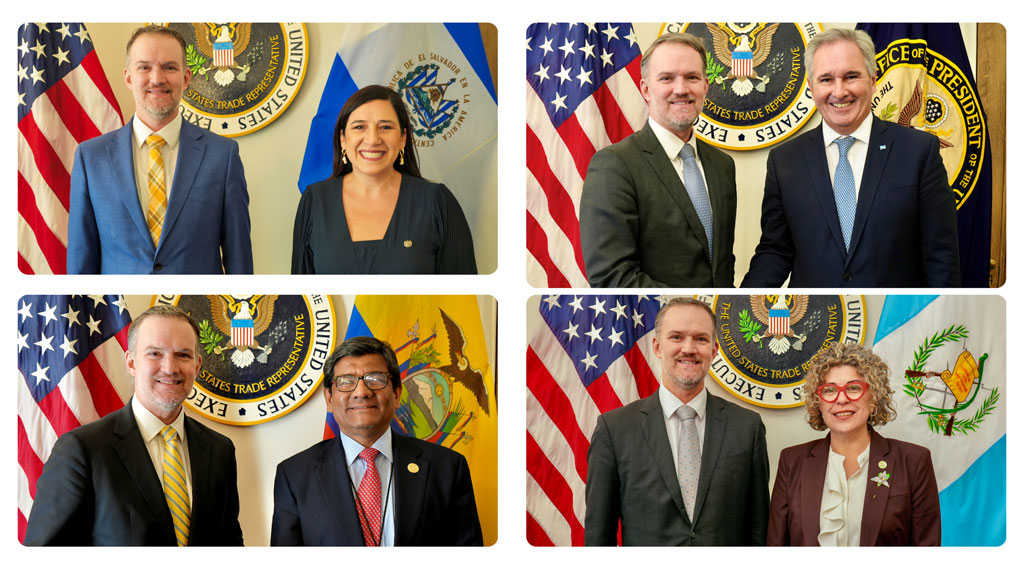
- The Trump Administration announced trade framework agreements with Argentina, Ecuador, Guatemala, and El Salvador. The provisions include lowering U.S. tariffs, improving market access for U.S. agricultural exports through reduced tariff and non-tariff barriers; and increasing alignment on intellectual property and geographical indications, among other elements.
- Argentina agreed to resolve certain long-standing non-tariff barriers on U.S. meats, including through open markets for U.S. live cattle; market access for U.S. poultry within one year; avoiding restrictions related to certain cheese and meat terms; and simplified product registration for beef, beef products, beef offal, and pork. The country also agreed not to apply facility registration for imports of U.S. dairy products.
- Ecuador has committed to avoiding market access restrictions due to the use of certain cheese and meat terms and committed to reforming its import licensing and facility registration systems for food and agriculture products.
- According to the Office of the U.S. Trade Representative, the U.S. frameworks with Guatemala and El Salvador are built on top of the Dominican Republic-Central America-United States Free Trade Agreement (CAFTA-DR).
- Guatemala and El Salvador have committed to addressing barriers to U.S. agricultural products and accept currently agreed certificates issued by U.S. authorities.
- The environmental provisions of each of the deals mention either implementation or enforcement of the WTO Agreement on Fisheries Subsidies.
FRAMEWORK AGREEMENTS WITH SWITZERLAND AND LIECHTENSTEIN
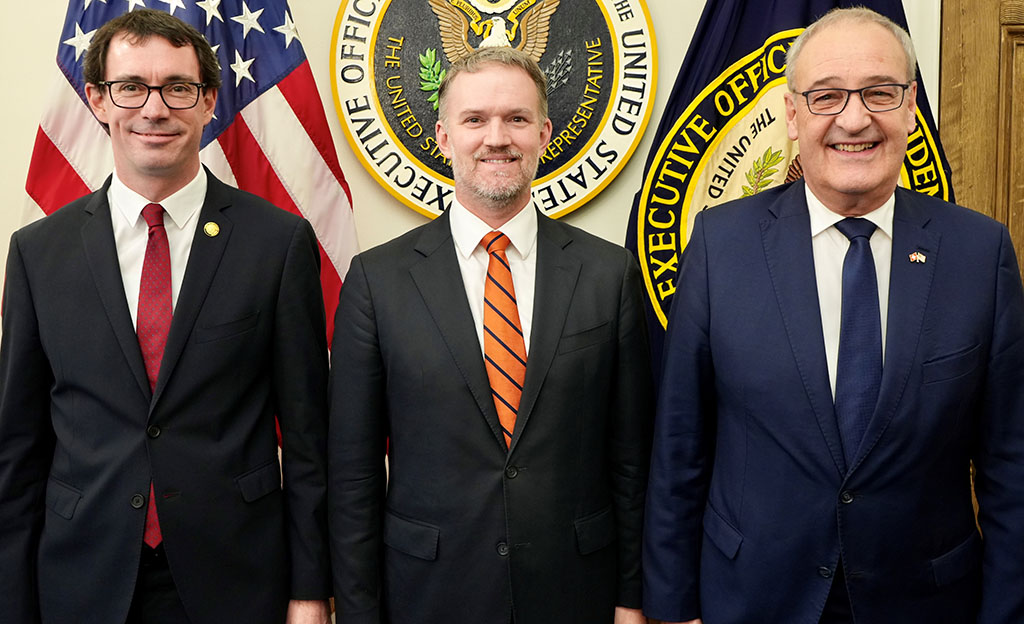
- The U.S. has reached a trade framework agreement with Switzerland and Liechtenstein to lower reciprocal tariffs from 39% to 15%. The deal covered investment, tariffs, non-tariff barriers, digital trade and technology, and economic security.
- The fact sheet states that Switzerland and Liechtenstein intend to remove tariffs across agricultural products, including fresh and dried nuts, fish and seafood, certain fruits, and spirits. Additionally, the countries will establish a tariff rate quota for U.S. poultry, beef, and bison.
- The U.S. agreed to limit tariffs on imports from Switzerland and Liechtenstein to the higher of the U.S. most favored nation rate (MFN) or 15% and reverting to only charging MFN rates on certain products listed in the “Potential Tariff Adjustment for aligned Partners” Annex. The U.S. made other concessions regarding tariffs on pharmaceutical goods and semiconductors.
- Switzerland and Liechtenstein intend to address a list of non-tariff barriers.
- Swiss and Liechtenstein companies agreed to invest at least $200 billion into the U.S., with at least $67 billion worth of investments occurring in 2026.
TARIFF REBATES
- President Donald Trump has suggested that a $2,000 stimulus payment could be issued using tariff revenues.
- Trump also suggested that tariff revenue go toward paying down the national debt.
US – SOUTH KOREA STRATEGIC INVESTMENT FUND
- In Oct. 2025, the White House announced that the agreed-upon investment fund between the U.S. and South Korea would target the American shipbuilding sector and other strategic priorities of the administration.
- The U.S. and South Korea released a memorandum of understanding stipulating that South Korea will invest a total of $150 billion into the U.S. shipbuilding sector. The MOU also includes $200 billion for other investments.
- South Korea will not have to invest more than $20 billion per year.
- If South Korea chooses not to fund its agreed investment amount after consultations, it forfeits certain distribution entitlements and shifts to a revised allocation structure. Critically, the U.S. reserves the right to impose tariff rates on Korean imports at a level determined by the President.
Supply Chains
SUPPLY CHAIN CONCERNS: ANIMAL FEED
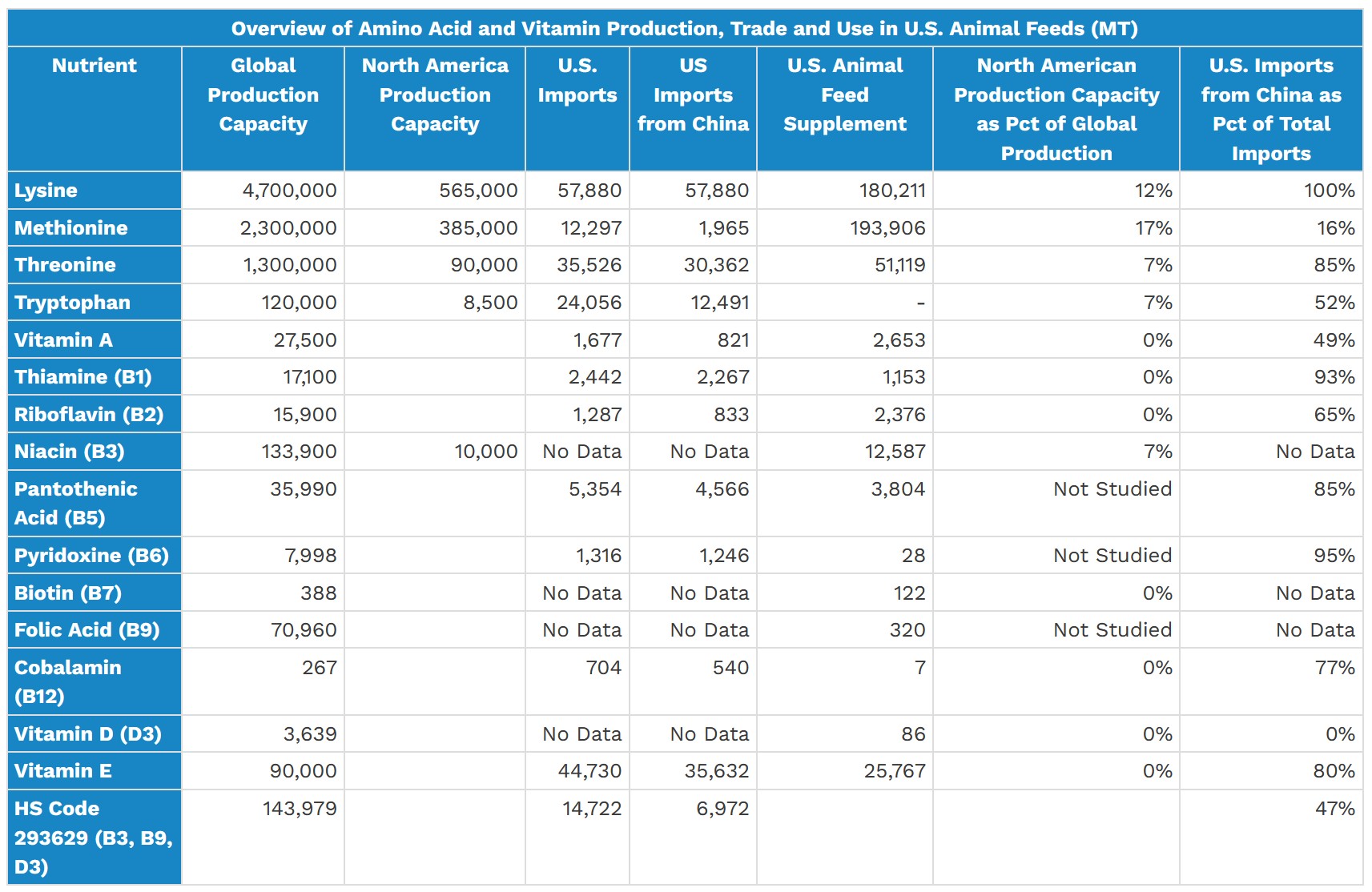
- The American Feed Industry Association (AFIA) warned, based on a report by the Institute for Feed Education and Research (IFEEDER), that America’s animal food supply chain is vulnerable due to China’s dominance of the global production capacity for key vitamins and amino acids used in food for animals and humans.
- The report highlights key nutrients and their inclusion in animal feeds, North American production capacity, U.S. imports – both globally and from China, and key impacts of these nutrients.
WTO
RIPE OLIVES FROM SPAIN
- On Oct. 25, a World Trade Organization (WTO) arbitrator determined the European Union may seek authorization to suspend concessions to the U.S. up to $13.64 million annually (with future amounts based on a methodology set out in the decision) in the EU’s challenge of U.S. anti-dumping and countervailing duties on Spanish ripe olives.
- The EU has successfully challenged Section 771B of the U.S. Tariff Act of 1930, which requires the U.S. Department of Commerce to presume the entire benefit of a subsidy provided with respect to a raw agricultural input is passed through to the downstream processed agricultural product.
SANITARY AND PHYTOSANITARY COMMITTEE MEETINGS
- The WTO’s Committee on Sanitary and Phytosanitary Measures held the first meeting of the Transparency Working Group, which is aimed at enhancing transparency and cooperation regarding SPS notifications.
- The committee discussed the new SPS mentoring system, which is designed to assist members classified as developing and least developed countries in their transparency and engagement; members expressed appreciation and support for the program.
- Members raised a record 71 specific trade concerns, including 11 that were raised for the first time.
- Other meetings included a thematic session focused on science-based SPS import controls, animal disease, and relevant information from Codex, International Plant Protection Convention, and the World Organization for Animal Health.
Climate Conference
30th CONFERENCE OF THE PARTIES (COP30)
- The COP30 Climate Conference, taking place in Belém, Brazil, from Nov. 10–21, will highlight how global trade and agriculture intersect with climate action.
- The event aims to focus on sustainability and biodiversity protection. “Each day is intended to connect negotiations with real-world impact, offering a platform where implementation, equity, and urgency meet,” said André Corrêa do Lago, COP30 President-Designate.
- On Nov. 14-15, discussions on green trade, carbon markets, and low-emission supply chains emphasized how trade policy can serve as a climate solution.
- The thematic day scheduled for Nov. 19–20 will explore transforming global food systems to enhance climate resilience and food security. Topics include sustainable farming, fisheries management, and empowering women in climate-smart agriculture.