TRADE UPDATE
Food & Agriculture
October 14, 2025
By Kristy Goodfellow, Vice President of Trade and Industry Affairs, Ameya Khanapurkar, Project and Policy Coordinator, and Jacob Slattery, CRA Intern
HIGHLIGHTS
- Tariffs and Bilateral Negotiations:
- China recently announced new export restrictions on rare earth minerals, prompting President Donald Trump to threaten to impose an additional 100% tariff on China on Nov. 1.
- U.S. industry groups are requesting short-term relief and long-term foreign market access, but Agriculture Secretary Brooke Rollins said an aid package will have to wait until the government reopens.
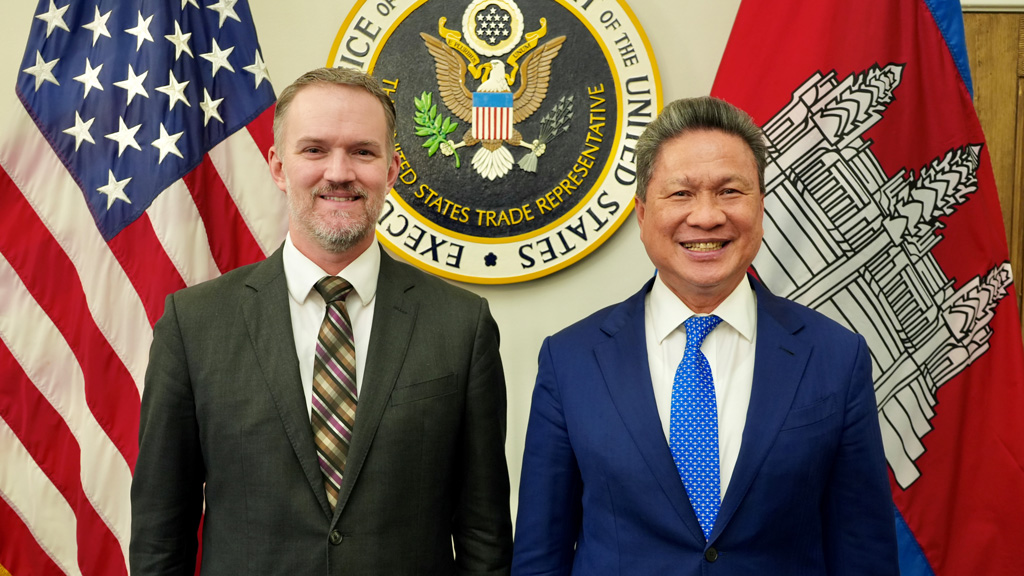
- USTR issued a statement on negotiating progress with Cambodia following a meeting with Ambassador Jamieson Greer and Cambodian Deputy Prime Minister Sun Chanthol.
- Multilateral:
- The WTO Global Trade Outlook and Statistics highlights a 7% increase in trade in agricultural products during the first six months of 2025 compared to 2024 figures.
- The UNCTAD’s October 2025 Global Trade Update highlights global trade is on track to surpass its 2024 record; trade in goods and services remains strong despite policy changes and global economic uncertainty.
- Trade Remedies:
- On Sept. 25, 2025, China’s Ministry of Commerce self-initiated an antidumping investigation into pecan imports from the U.S. and Mexico. The move came shortly after Mexico announced tariffs on several industrial sectors that will apply to China.
- Transportation:
- USTR modified and proposed further modifications to aspects of the Section 301 Ships Action.
- Congress:
- On Oct. 8, Sens. Ron Wyden (D-OR) and Rand Paul (R-KY) introduced S.J. Res. 88, a binding, privileged resolution that requires a Senate simple majority vote to terminate the Trump administration’s global tariffs imposed under emergency powers.
“Farmers just want to sell their product. They don’t want checks from the government. But until we get there with all these new trade deals opening up markets by the president, onshoring our food supply for health reasons but national security reasons – we will get there, but until then we will be announcing a program as soon as the shutdown ends on what we’re going to do in the short term for these row croppers, including our soybean farmers.”
—Secretary of Agriculture Brooke Rollins in an interview with Fox
Tariffs and Bilateral Negotiations
TRUMP THREATENS HIGHER TARIFFS ON CHINA
- China announced on Oct. 9 new export restrictions on rare earth minerals, prompting an Oct. 10 threat from President Donald Trump to threaten to impose an additional 100% tariff on China effective Nov. 1. He subsequently took a softer tone on China on Oct. 12.
- Trump also indicated that he would forgo meeting with Chinese President Xi Jinping at the upcoming Asia-Pacific Economic Cooperation event in South Korea, scheduled for late October.
- The American Soybean Association expressed disappointment at the cancellation of the leaders’ meeting, emphasizing their prior hope that these talks would lead to restoring access to Chinese markets for soy exporters.
AGRICULTURE GROUPS REQUEST AID PACKAGE AND FOREIGN MARKET ACCESS
- Ag Secretary Brooke Rollins said last week that an ad hoc assistance package for farmers will have to wait until the government reopens.
- In a recent letter signed by more than 200 groups, numerous grower associations urged the Trump Administration to provide support in the short run as the administration pursues long-term market access.
- The letter emphasizes the longer-term need for securing new export market access and domestic market expansion.
- Another letter from the Specialty Crop Alliance noted similar economic challenges as row crop producers and requested that the specialty crop relief program from the first Trump Administration be reinstated.
USTR ISSUES STATEMENT ON PROGRESS WITH CAMBODIA
- The Office of the U.S. Trade Representative issued a statement of negotiating progress with Cambodia, which included a picture of USTR Jamieson Greer and Cambodian Deputy Prime Minister Sun Chanthol.
- In 2024, the U.S. exported over $107 million in agriculture and related products, including $24 million in distillers grains, $21 million in hides and skins, and $12 million in soybean meal.
- That same year, the U.S. imported over $370 million in agricultural and related products from Cambodia, all of which were forest products.
Multilateral
WTO TRADE FORECAST
- In the October 2025 edition of the Global Trade Outlook and Statistics, the World Trade Organization (WTO) increased the 2025 world merchandise trade volume growth forecast to 2.4% from August’s growth outlook of 0.9%.
- The report notes a 4.9% increase in world merchandise trade in the first half of 2025, which was faster than expected. This expansion is primarily due to frontloading imports in anticipation of higher tariffs, disinflation, strong growth in emerging markets, and a surge in demand for AI-related goods.
- However, the report warns of weaker trade growth in the second half of 2025 and through 2026 due to higher tariff levels in place and lingering trade policy uncertainty.
- The report highlights a 7% increase in year-on-year merchandise trade growth in agricultural products between 2025 and 2024 (January–June).
UNCTAD GLOBAL TRADE UPDATE
- According to UN Trade and Development’s (UNCTAD) Global Trade Update October 2025 edition, global trade expanded by roughly $500 billion in the first half of 2025. The report highlights that global trade is on track to surpass its 2024 record as trade in goods and services remains strong despite policy changes and global economic uncertainty.
- Global imbalances in goods trade, which had widened in recent quarters, narrowed in the second quarter of 2025, reflecting changes in U.S. trade policy and weak growth when compared to the rest of the world.
- UNCTAD notes that trade growth has been broad-based across regions, with developing economies seeing steady export gains, particularly in manufactured goods and energy-related commodities.
Trade Remedies
CHINA ANTIDUMPING INVESTIGATION ON US AND MEXICAN PECANS
- On Sept. 25, 2025, China’s Ministry of Commerce self-initiated an antidumping investigation into pecan imports from the U.S. and Mexico to determine whether they are being sold below fair market value, allegedly harming China’s domestic pecan industry.
- The investigation was announced shortly after Mexico announced tariffs across multiple industrial sectors on imports from countries with which Mexico does not have trade agreements, including China.
- According to U.S. customs data, the U.S. exported over $90 million worth of in-shell pecans and $3 million worth of shelled in 2024.
- The review covers fresh or dried pecans and focuses on exports from Jan. 1–Dec. 31, 2024.
- Procedural deadlines include: registration by Oct. 15, 2025; initial questionnaire responses by Dec. 3, 2025; and a final determination expected around Sept. 23, 2026.
Transportation
USTR MODIFIES ACTION ON SHIPBUILDING SECTION 301
- USTR outlined modifications of action based on public comments from USTR’s April 23 and June 25 notices from this year and proposed further modifications.
- USTR initiated a Section 301 investigation on China’s targeting of the shipbuilding sector in April.
- The deadline to submit comments on the proposed modifications is Nov. 12, 2025.
Congress
RESOLUTION TERMINATING GLOBAL TARIFFS
- On Oct. 8, Sens. Ron Wyden (D-OR) and Rand Paul (R-KY) introduced S.J. Res. 88, a binding, privileged resolution requiring a Senate simple majority vote to terminate the Trump Administration’s global tariffs imposed under emergency powers.
- Following the defeat of S.J. Res. 49 in April, Congress can re-vote every six months under the International Emergency Economic Powers Act (IEEPA).
- Supporters of the resolution argue tariffs on nearly every country have raised consumer prices, strained small businesses and farmers, disrupted manufacturing supply chains, and created widespread market uncertainty.